Creating an energy-efficient home involves implementing various measures and technologies to reduce energy consumption, lower utility bills, and minimize environmental impact. Here are some key strategies for achieving an energy-efficient home:
Insulation: Ensure proper insulation in walls, ceilings, and floors to prevent heat loss in winter and heat gain in summer.
Use energy-efficient windows and doors with double or triple glazing.
Energy-Efficient Appliances: Invest in Energy Star-rated appliances, which meet strict energy efficiency guidelines set by the U.S. Environmental Protection Agency (EPA).
Choose energy-efficient lighting options, such as LED bulbs.
Smart Thermostats: Install programmable or smart thermostats to regulate heating and cooling efficiently, adjusting temperatures based on your schedule and preferences.
Sealing Leaks: Seal gaps and cracks in walls, windows, and doors to prevent drafts and air leakage. This helps maintain a consistent indoor temperature.
Energy-Efficient HVAC Systems: Upgrade to energy-efficient heating, ventilation, and air conditioning (HVAC) systems.
Regularly maintain and clean HVAC equipment to ensure optimal efficiency.
Solar Panels: Consider installing solar panels to generate renewable energy and reduce dependence on conventional power sources.
Energy-Efficient Water Heating: Insulate your water heater and consider using a tankless or on-demand water heater, which heats water only when needed.
Energy-Efficient Landscaping: Plant trees and shrubs strategically to provide shade in the summer and windbreaks in the winter.
Use reflective materials for outdoor surfaces to reduce heat absorption.
Smart Home Automation: Implement smart home systems to control lighting, thermostats, and other devices remotely, optimizing energy usage.
Energy Audits: Conduct regular energy audits to identify areas of improvement and track energy usage patterns.
Water Conservation: Install low-flow faucets, showerheads, and toilets to reduce water consumption.
Fix leaks promptly to prevent unnecessary water waste.
Energy-Efficient Building Materials: Choose energy-efficient building materials during construction or renovation to enhance insulation and overall efficiency.
Energy-Efficient Practices: Encourage energy-efficient habits among occupants, such as turning off lights and electronics when not in use.
Government Incentives:
Explore available government incentives, tax credits, or rebates for energy-efficient home improvements.
.


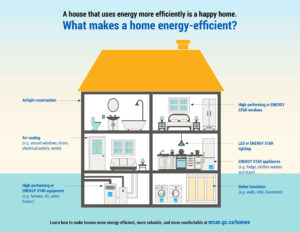 Any home, no matter when it was built, can be energy-efficient. Modern construction standards demand greater energy efficiency in new homes, but older homes can be upgraded to improve their energy performance. And the people living in these homes can be energy-efficient in their habits, too.